
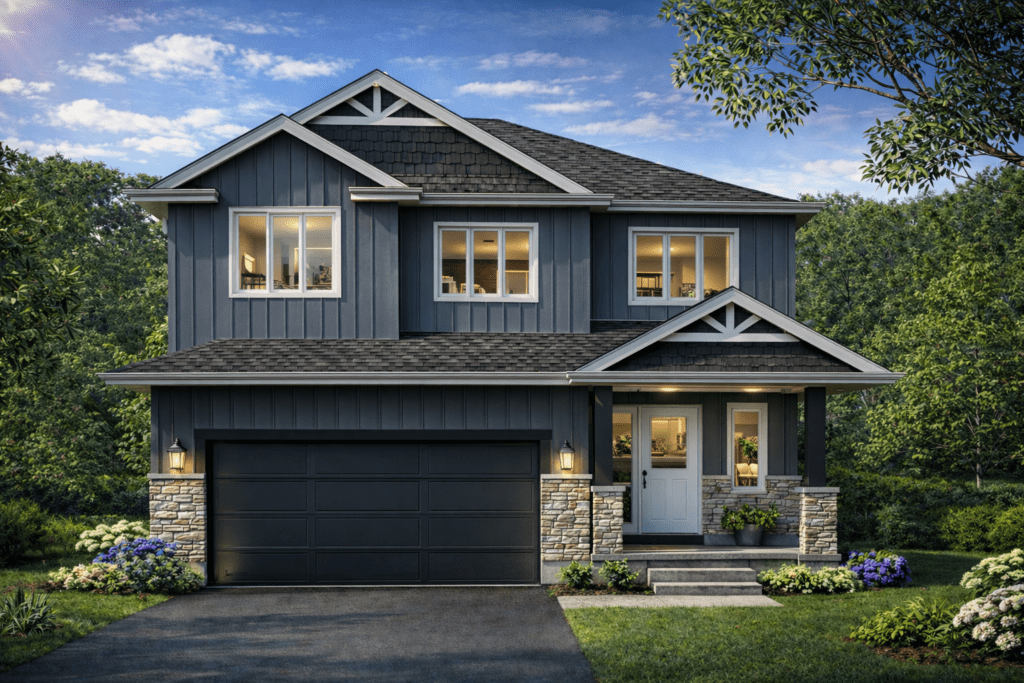
If you are planning a custom home for a 2027 move-in, you are probably wondering when to start? In short, the answer is as soon as possible. A custom build in Wellington County usually takes 18 to 24 months from your first design meeting to handing over the keys. That means the ideal window to get started when planning a custom home for a 2027 move-in is spring through fall of 2026.
Most people underestimate this. They think a year is enough. It almost never is. Here’s what actually goes into the timeline, and why starting early gives you a much better home in the end.
The Real Timeline for a Custom Home Build
Every project is a little different, but at WrightHaven we see the same pattern across most builds:
Design, engineering, and approvals: 6 to 9 months
This is where the foundation of your project gets set. It includes:
- Initial design meetings to understand how you actually live
- Architectural drawings and revisions (yes, plural)
- Engineering and structural plans
- Energy modelling if you’re going NET ZERO or ENERGY STAR
- Permit applications with the township
- Zoning checks, setbacks, and any conservation authority reviews
If you’re building on your own lot in places like Centre Wellington, Mapleton, or further out into the county, this stage can stretch longer depending on what the municipality needs.
Construction: 10 to 14 months
Once permits are in hand, the build itself moves through these stages:
- Site prep and excavation
- Foundation
- Framing and roof
- Mechanicals (HVAC, plumbing, electrical)
- Insulation, drywall, and interior finishing
- Cabinetry, flooring, paint, and fixtures
- Exterior work, landscaping, and final inspections
Weather plays a role too. A foundation poured in October behaves differently than one poured in May. We plan around it, but it’s part of why timelines aren’t one-size-fits-all.
Buffer time: a few weeks to a few months
Things happen. A custom selection comes in late from the supplier. The municipality flags something during a permit review. The site reveals something unexpected once excavation starts. Smart planning builds in some breathing room so a small delay doesn’t blow up your move date.
So What does That Mean When Planning a Custom Home For a 2027 Move-In?
Add it up:
- 6 to 9 months of design and approvals
- 10 to 14 months of construction
- A buffer for the unexpected
That’s 18 to 24 months total. Want to be sipping coffee on your new front porch by summer 2027? You should be in the design phase by spring or early fall 2026.
Why Starting Early Actually Saves You Money
People sometimes wait because they think they’re not ready. The truth is, starting earlier almost always pays off. Here’s why:
Better lot selection. The best lots in our communities like Pasture Edge, Creek Bank Meadows, and Cherrywood Estates go first. The longer you wait, the fewer choices you have.
Real design time, not rushed decisions. Choosing finishes, layouts, and features under deadline pressure is how people end up with regrets. Starting early means you get to live with decisions for a few weeks before locking them in.
Cost certainty before market shifts. Material prices and trade availability move with the market. Locking in a build agreement earlier protects you from surprises later.
Time to sort out financing. Construction financing works differently than a regular mortgage. Getting that conversation started months in advance makes everything smoother.
What Happens if You Wait Until 2027 to Start?
If you are planning a custom home for a 2027 move-in, you can still build a custom home, but you’re probably looking at a 2028 or 2029 move-in. You’ll also have less choice on lots, less time on design decisions, and more exposure to whatever the market is doing at that moment. Not the end of the world, but not ideal if 2027 is the goal.
Your Spring 2026 Starter Checklist
If you’re serious about planning a custom home for a 2027 move-in, here’s what to tackle in the next few months:
- Get clear on your budget range and talk to a lender about construction financing
- Decide whether you’re building on a WrightHaven lot or your own property
- If it’s your own land, confirm legal title and check for any zoning or setback issues
- Start a rough wishlist of what matters most in the home (square footage, bedrooms, must-haves)
- Book a discovery meeting with a builder to walk through the process
That last one is the biggest unlock. The conversation itself usually clarifies more in an hour than weeks of Pinterest scrolling.
Ready to Start?
If you are planning a custom home for a 2027 move-in as a goal, the clock is already ticking. We’d love to sit down with you, look at what you’re hoping to build, and map out a realistic timeline based on your situation.
Book a free custom build discovery meeting with WrightHaven Homes. No pressure, no obligation, just a real conversation about whether your timeline and vision line up.
Frequently Asked Questions
How long does it take to build a custom home in Wellington County?
Most custom homes in the Fergus, Elora, and Palmerston area take 18 to 24 months from the first design meeting to move-in. That includes 6 to 9 months for design, engineering, and permits, plus 10 to 14 months of construction.
Can I build a custom home in less than a year?
Realistically, no. Even smaller custom builds need time for proper design, engineering, permitting, and construction. Anyone promising a sub-12-month custom build is either cutting corners or talking about a production home rather than a true custom one.
When should I start planning if I want to move in by spring 2027?
Start in spring 2026 at the latest. That gives you 6 to 9 months for design and approvals through the rest of 2026, and 10 to 14 months of construction through 2027.
Do I need to own land before contacting a custom home builder?
No. WrightHaven has communities with available lots in places like Palmerston and Inverhaugh. You can also bring your own land. Either way, a discovery meeting is a good first step.
What’s the first step in the custom home process?
A discovery meeting with the builder. We’ll talk through your goals, budget, timeline, and lot situation, then walk you through what comes next. There’s no cost or commitment to have this conversation.
How much deposit do I need to start a custom home build?
Initial deposits at WrightHaven are typically around 10 percent, with progress draws built into the rest of the build (20 percent at foundation, 20 percent at close-in, 20 percent at drywall, 20 percent at occupancy, balance due net 30). Specifics get spelled out in your build agreement.
Is WrightHaven a NET ZERO builder?
Yes. WrightHaven is a licensed and registered NET ZERO builder, and every home we build can hit the highest energy efficiency ratings under ENERGY STAR and EnerGuide standards. If energy efficiency matters to you, we can build to those standards.
Still considering planning a custom home for a 2027 move-in? Our experts at WrightHaven are here to guide you through the process and answer any questions you may have. Contact us today to get the conversation started.